
Having the Ability to Adapt Your Business to a Recession


Recession can be a terrifying word to mention around a boardroom table, yet having a plan in place to avoid its downward spiral and emerge stronger is essential for business survival.
Economic adaptation is a powerful strategy businesses can employ in any market condition, whether that means taking advantage of new opportunities, adopting technology solutions or understanding consumer preferences, or investing in training and development initiatives.
Innovation
Innovation is a powerful source of growth that propels businesses forward. From developing new products or improving existing ones to streamlining processes for operational efficiencies, innovation helps businesses develop and redefine markets – especially during times of economic turmoil. Innovation provides companies with a competitive advantage they need to maintain and strengthen in the marketplace.
Market downturns typically refer to reduced consumer spending and income levels across society as a whole, leaving business owners and managers concerned that revenue won’t come in as expected. It is important to remember, though, that market downturns do not indicate consumers stopping purchasing entirely; it simply means they may become more selective and budget conscious buyers.
Companies focusing their efforts on innovation during market downturns can stay competitive and even find ways to boost revenues. Innovative strategies may include creating products or services tailored specifically to a certain group of customers; creating business models which offer cost savings for their customers; or offering solutions for social and environmental problems.
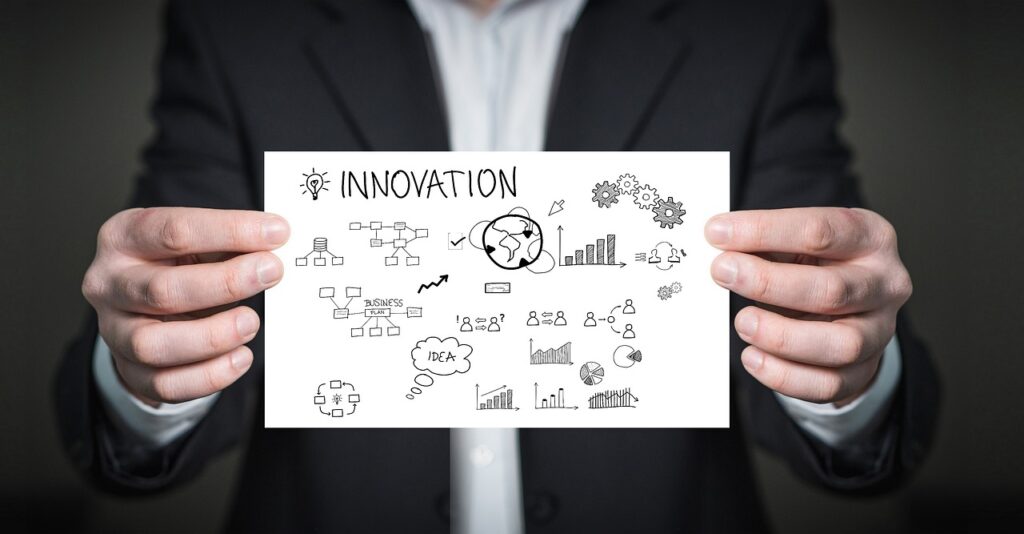
Innovation is critical in any environment, but particularly so during economic downturns. Businesses who fail to uphold an innovation culture during a market downturn will struggle to return to where they were before the recession hit; on the other hand, those that have continued innovating throughout will rebound much quicker once economic activity improves again.
Innovation often carries with it high expectations and can seem intimidating, yet it doesn’t need to be an all-consuming company-wide initiative focused on creating groundbreaking solutions and revenue streams from scratch. Instead, continuous improvement or incremental innovation may also prove effective; these approaches focus on small improvements that make an existing product or service better in some way – they may not make headlines as much, but still make a difference in business world.
Customer Needs
Customer needs are what motivate people to buy products and services from businesses, whether physically (a hunger pang prompting someone to grab quick snack) or emotionally (anxiety over losing their job causing them to seek new work opportunities). Understanding your customer needs can help you better understand which kinds of products and services your customers are interested in; with this insight in hand you can tailor product messaging specifically towards those needs.
Businesses must prioritize customer retention during times of economic instability. Pleasing customers can help build long-term loyalty that could prove invaluable when the economy recovers; according to research, companies that excel at satisfying their customers experience 5.7 times higher revenue than their counterparts that do not satisfy customers as effectively.
Conducting market research and analyzing data are both great ways to identify customer needs; however, listening and observing your customers as they engage with your brand through customer surveys, in-person interviews or even social media monitoring can also yield invaluable insight that can help your business flourish during and after recessions.

Businesses should prepare for an economic downturn by ensuring they have sufficient funds in reserve to continue operations during a slowdown or by preemptively refinancing debts that are coming due in the near future.
At the same time, it’s wise to implement measures such as cutting expenses or freezing business lines that won’t generate revenues in a recessionary environment. Such steps will ensure your business keeps its profit margin healthy and has enough cash reserves when the economy improves. Furthermore, investing in emerging technologies that make your company more competitive – for instance automating processes, employing artificial intelligence/machine learning/deep learning technologies faster detection security threats faster detection analytics to gain insight into customer behaviors are all ways of planning for longer-term economic recovery.
Technology
Technology is a tool used by humans to facilitate efficient and effective tasks more easily and quickly. Its origin lies in ancient Greek and Latin terms meaning “a skill or practical process accompanied by scientific knowledge.” Technology’s applications range from increasing productivity to improving customer relationships; as well as leading advances in healthcare, manufacturing, communication technologies have had positive effects. But its rapid evolution poses some risks; some technologies may cause social hierarchies to break down while others may disrupt the environment or harm individuals or groups.
Businesses must remain on guard against the risks posed by new technologies and take careful consideration when considering whether they could have either positive or negative ramifications on their bottom lines. This is particularly pertinent during recessionary conditions when companies must strike a balance between maintaining their strengths while exploring innovation to remain competitive while weathering economic turmoil.
One effective strategy to protect your business during a recession is staying abreast of current technology trends. By adopting open banking, AR management solutions, AI and cloud computing services you can keep customers satisfied and prepare for any economic upswings that might follow.

As customers’ needs and interests change quickly during a recession, having access to real-time data and analytics helps your organization understand customer requirements more quickly and make smarter decisions about product design that aligns with customers’ priorities and enhance sales when the economy recovers.
Additionally, it’s essential to identify underserved markets that could benefit most from your technology during a recession. For instance, smaller tech and life sciences firms could be struggling during an economic downturn; offering your expertise could increase revenue swiftly.
Implement cost-cutting measures that will enable your technology or life science company to withstand an economic downturn and thrive when the market rebounds. By cutting costs, reevaluating management practices, adhering to your mission statement and engaging with customers as well as keeping an eye on economic indicators, you can establish a firm financial foundation that will enable it to thrive once economic recovery kicks in.
Competition
Recessions have the power to shake up businesses, altering sales and profits significantly. Customers tend to spend with caution while competition may reduce marketing activities. By adapting your company effectively during a downturn you may survive it and continue growing once it ends.
Businesses able to adapt, innovate and reach out to new audiences are likely to emerge stronger from a downturn than before they entered it. But for this kind of adaptation to work effectively, an enterprise must commit itself to being adaptable in the face of change – the best way to ensure this flexibility is built into processes from day one via agility or automation.
First and foremost, having an accurate overview of your business data is vital in order to recognize early warning signals of impending decline, such as a sudden decrease in sales during otherwise successful periods or customer hesitation to spend more.

Make sure that you have a plan in place to manage your cash flow; this will allow you to avoid making hasty decisions that could prove costly in the long run. Be sure to understand fully your current cash situation, with access to accurate data about inventory, accounts receivable and payable.
One of the keys to adapting your business in an economic downturn market is monitoring competitors. Without knowing their strategies and tactics, it will be impossible for you to adjust as effectively to changing circumstances.
An essential service or product business usually thrives during recession, such as healthcare, food production or utilities. You can increase competitiveness by focusing on these areas while being creative in how you market and sell. Collaborate with other businesses within your industry or local community in order to reach a wider audience while creating mutually beneficial relationships that help achieve growth in both parties involved.